Buying a ranch in Santa Ynez can feel exciting until you realize the real value is not just in the acreage or views. It is in the infrastructure that supports daily use, long-term upkeep, and your plans for the property. If you are evaluating an equestrian or rural estate in the Santa Ynez Valley, knowing what to inspect can help you avoid costly surprises and make a more confident decision. Let’s dive in.
Start With County Records
In Santa Ynez, ranch buyers are usually dealing with Santa Barbara County rules rather than city rules because Santa Ynez Valley includes unincorporated areas such as Santa Ynez, Ballard, and Los Olivos. That means planning, building, fire, flood, and environmental health reviews often happen at the county level.
This makes permit history an important part of due diligence. Santa Barbara County offers permit-status and archived permit-record lookups, so you can review whether barns, arenas, roads, and utility work were documented or whether certain structures may have relied on an exemption.
Some agricultural buildings up to 3,000 square feet may be exempt from building permits in specific situations, but that does not mean they are exempt from all rules. County code says these buildings still need to meet land use and separation requirements, and electrical, plumbing, and mechanical work may still require permits. For you as a buyer, a finished-looking structure is not enough. The record behind it matters too.
Check Barn Function, Not Just Appearance
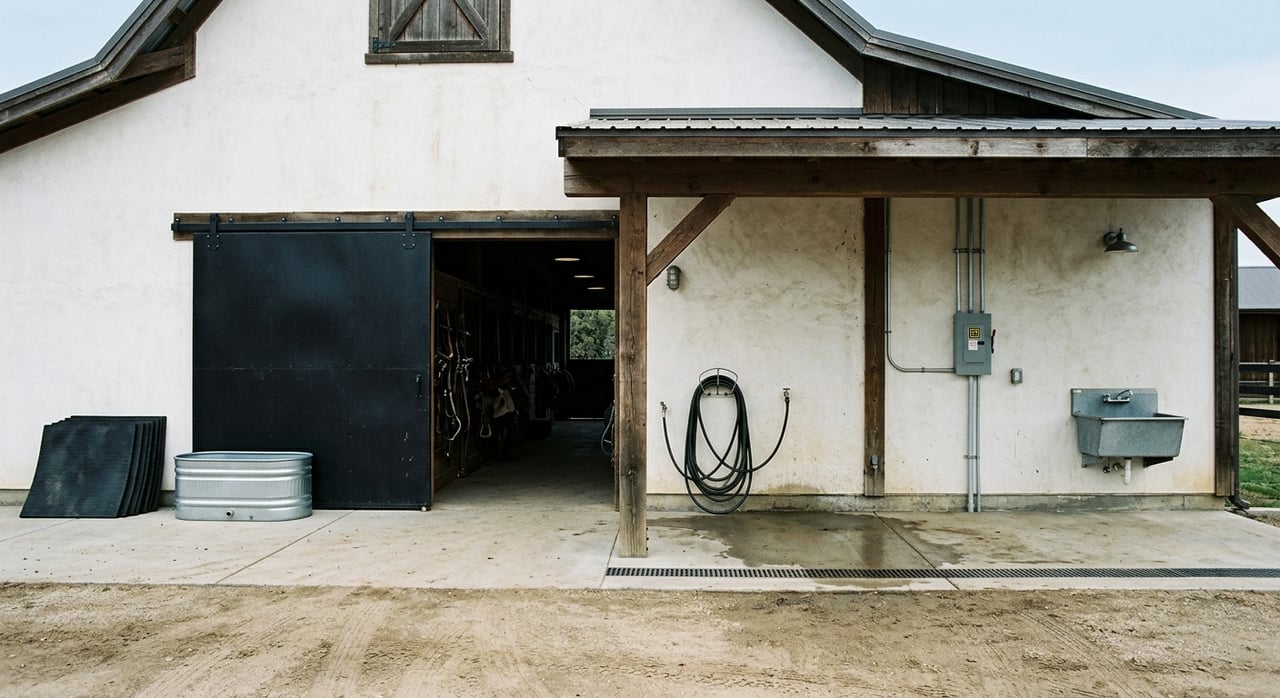
A barn can look polished and still fall short where it counts. A functional horse barn should provide weather protection, fresh air, dry bedding space, safe handling and feeding areas, and enough flexibility for future changes.
You should also look at how storage is arranged. Extension guidance notes that hay, feed, and bedding often work best in a separate storage area rather than inside the animal space. That setup can improve convenience and help reduce fire risk.
Look Closely at Ventilation
Barn ventilation is one of the most important condition checks. Good air exchange helps remove moisture, limit condensation, and maintain acceptable air quality.
When touring a property, watch for damp corners, a strong ammonia smell, condensation on ceilings or walls, or areas where the air feels stagnant. Those signs can point to a barn that may need more than cosmetic updates.
Inspect Stall Floors and Drainage
Stall flooring affects both usability and maintenance. The condition of the visible floor matters, but the subfloor and drainage design below it often matter more over time.
Look for evidence that wash areas and stalls were built with real drainage in mind. Water that lingers, soft spots, or worn surfaces in high-use areas can signal underlying issues that may require correction.
Review Electrical and Fire Safety
Older rural barns deserve extra attention when it comes to wiring and equipment. Extension guidance recommends agricultural-rated wiring and equipment, protective conduit, and regular removal of dust and cobwebs.
You should compare the condition of fans, lights, outlets, heaters, and the overall storage arrangement. If hay or bedding is stored close to animal housing, that may affect both safety and future upgrade costs.
Evaluate Arenas for Drainage and Base Quality
A riding arena should be judged on performance, not just appearance. There is no single perfect footing material because the right surface depends on use, drainage, maintenance, and how the base and sub-base were constructed.
Ask how the arena is watered, how drainage is handled, and how often the footing is dragged or amended. A surface that looks level on a dry day may perform very differently after rain or heavy use.
Ask About Ongoing Maintenance
Arena footing is not a one-time install. It usually needs regular watering, maintenance, and occasional top-off or adjustment.
You should find out whether the footing holds grade, whether loose material collects near fence lines, and whether the arena stays usable through seasonal weather shifts. Those answers can tell you a lot about ongoing operating costs.
Assess Fencing, Paddocks, and Equipment Flow
Fencing should support horse safety and daily ranch function. Guidance for horse facilities recommends fencing that is highly visible, free of sharp projections, and not made with barbed wire.
A perimeter fence of about 5 feet is commonly recommended for containment. Beyond that, you should look at whether low spots collect water, whether corners are practical, and whether the materials appear manageable to maintain.
Make Sure Gates Work for Real Use
A ranch may have attractive fencing and still be awkward to operate. Gates need to be placed and sized for horse trailers, tractors, mowers, and other equipment.
Pay attention to circulation between the barn, paddocks, storage areas, and manure or equipment zones. Smooth movement across the property can be just as important as the number of stalls or the size of the arena.
Match the Property to Your Intended Use
If your plans go beyond private horse keeping, zoning deserves close review. Santa Barbara County code allows horses and mules generally in AG-I and AG-II agricultural zones, but some commercial uses require additional approvals.
For example, commercial boarding and raising animals for members of the public in AG-I requires a conditional use permit. Some horseback riding operations may also require a land use permit depending on the specific use and zone.
This means the right question is not only whether a property has the right improvements. It is also whether the parcel can legally support your intended operation.
Review Access Roads With Fire Standards in Mind
Access is one of the biggest infrastructure issues in Santa Ynez ranch purchases. Santa Barbara County Fire standards require driveways to provide a 12-foot traffic lane, 16 feet of unobstructed horizontal clearance, and 13.5 feet of unobstructed vertical clearance.
Vegetation also needs to be maintained so emergency equipment can pass. Overhanging trees and shrubs must be trimmed to preserve clearance above the roadway, and gates across fire access roads must be approved and fitted with the proper locking system.
Watch for Hidden Upgrade Costs
A long driveway may feel private and scenic, but it can still create operational issues if trucks, trailers, or emergency vehicles cannot move through safely. You should ask whether trimming, grading, widening, or gate changes may be needed.
These items can affect both daily convenience and future ownership costs. They can also matter when you evaluate insurability and overall usability.
Understand Defensible Space Requirements
Defensible space is not just about appearance. It is part of how the property functions and how it is evaluated during a sale.
Santa Barbara County Fire says that, on and after July 1, 2021, sellers of property in certain high fire or very high fire severity zones must provide prospective buyers with documentation of a compliant defensible-space inspection. If a ranch falls within one of those qualifying areas, you should ask whether that documentation is already available.
You should also ask whether the site may require ongoing trimming or additional fire-hardening work. In some difficult or dangerous areas, the department may require greater protection levels.
Treat Water and Septic as Core Infrastructure
Many ranch properties in Santa Ynez rely on private utility systems. Where there is no public sewer connection, onsite wastewater treatment systems, commonly called septic systems, are used.
Santa Barbara County also identifies the Santa Ynez River Valley Groundwater Basin as one of the county’s major groundwater basins, and county water facts note that residents obtain water from sources that include groundwater withdrawal. For you, that means wells and water systems deserve close scrutiny.
Ask Detailed Water Questions
You should understand well yield, water quality, tank storage, pump capacity, and backup power. On a ranch, water demand may extend beyond household use to include animals, wash racks, irrigation, and arena watering.
A property that appears turnkey on the surface may still need meaningful utility upgrades if the water system cannot support the way you plan to use it.
Confirm Septic Capacity
Septic should be reviewed as part of the property’s overall operating capacity. The question is not only whether it serves the residence, but whether the system size and condition make sense alongside barn-related use and the broader site layout.
This is especially important when multiple improvements are spread across a rural parcel. Utility performance often shapes how efficiently the property can function day to day.
Factor In Flood and Drainage Risk
Flood exposure should be reviewed early in your ranch search. Santa Barbara County says revised special flood hazard areas include parts of Santa Ynez, and the county provides flood-hazard inquiries for unincorporated properties.
That matters because ranch infrastructure is highly sensitive to grading, runoff, and seasonal water movement. Barns, arenas, driveways, manure areas, and lower paddocks can all become difficult or expensive to maintain when they sit in the wrong place.
A property with beautiful views but poor drainage may cost far more to improve than one with more modest aesthetics and a better site plan. Clean water movement and usable pads can protect both function and long-term value.
A Practical Ranch Infrastructure Checklist
As you compare Santa Ynez ranch properties, these are smart questions to bring to inspections and consultant conversations:
- Are the barn, stalls, arena, access improvements, and other major features documented in county permit records?
- Is any structure relying on a permit exemption, and if so, were related requirements still met?
- Does the barn have proper ventilation, workable drainage, and safe electrical systems?
- Are hay, bedding, and feed stored in a way that supports safer daily use?
- Was the arena built with a proper base and drainage plan?
- Are fences visible and horse-safe, and are gates wide enough for trailers and equipment?
- Does the driveway appear to meet county fire access standards for width and clearance?
- If the parcel is in a qualifying fire zone, is compliant defensible-space documentation available?
- What are the well yield, water quality, storage, pump, and backup-power details?
- Is the septic system adequate for the residence and overall ranch use?
- Is any part of the site in a flood-prone or low-drainage area that could affect daily operation?
Buying a ranch in Santa Ynez is as much about evaluating systems as it is about choosing a setting. When barns, arenas, access, water, and site conditions are reviewed carefully, you are in a much stronger position to understand true value and plan your next steps with confidence.
If you are considering a ranch or equestrian property in the valley, Central Coast Landmark Properties , Inc. offers discreet, local guidance tailored to complex rural acquisitions.
FAQs
What ranch infrastructure should you inspect first when buying in Santa Ynez?
- Start with county permit records, barn condition, access roads, water systems, septic, and drainage because these items affect legality, safety, and day-to-day function.
Why do county permit records matter for Santa Ynez ranch properties?
- Santa Ynez buyers typically deal with Santa Barbara County rules, and permit records can help confirm whether barns, arenas, roads, and utility work were properly documented or partially exempt.
What should you look for in a horse barn on a Santa Ynez ranch?
- Focus on ventilation, stall-floor drainage, wiring condition, safe storage layout, and whether the barn supports practical daily movement and future flexibility.
How can you evaluate a riding arena on a Santa Ynez property?
- Ask about the arena base, sub-base, drainage, watering method, footing maintenance schedule, and how the surface performs after rain or heavy use.
What fire access standards matter for ranch driveways in Santa Ynez?
- Santa Barbara County Fire requires a 12-foot traffic lane, 16 feet of unobstructed horizontal clearance, 13.5 feet of vertical clearance, and approved gates on fire access roads.
Why should you check flood risk when buying a ranch in Santa Ynez?
- Parts of Santa Ynez fall within revised special flood hazard areas, and drainage problems can affect barns, paddocks, arenas, and access roads in costly ways.