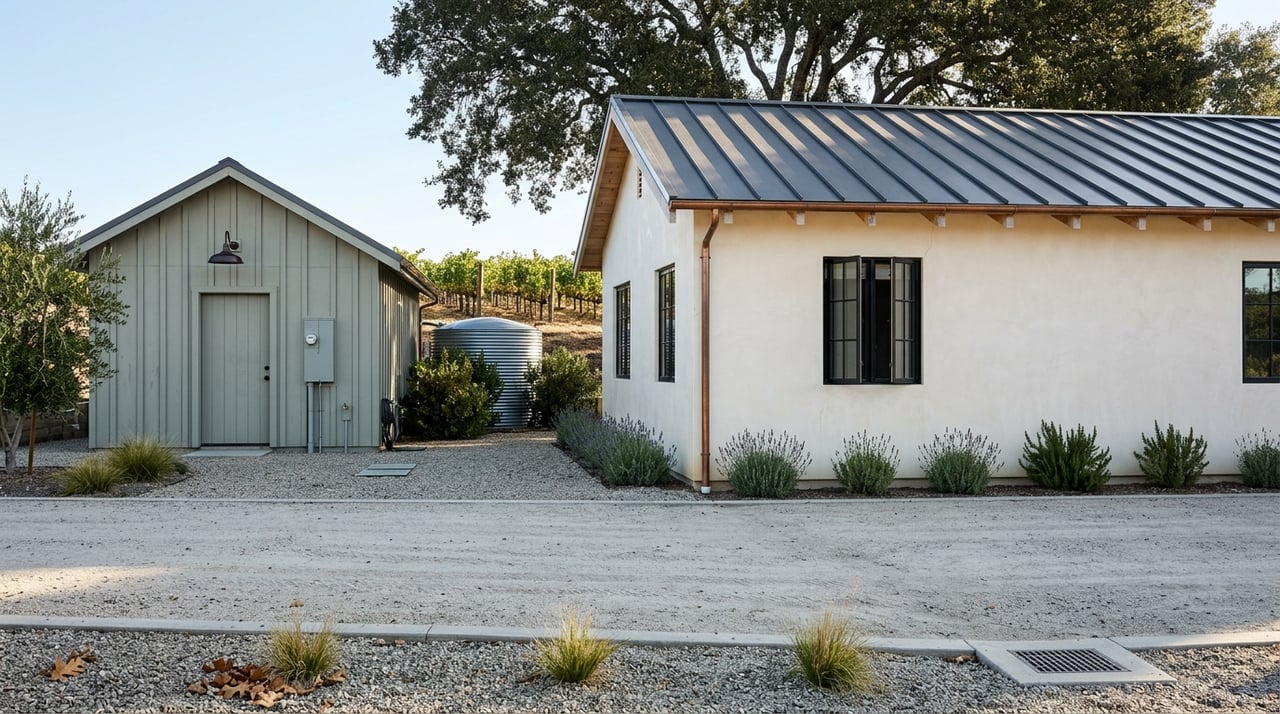
Buying acreage in Los Olivos can feel like a dream on paper, but the real value of a rural parcel comes down to what you can actually do with it. If you are thinking about building, planting vines, keeping horses, or simply protecting a long-term lifestyle investment, you need more than a pretty setting and a lot count. You need clear facts about access, water, wastewater, topography, and ongoing ownership demands. Let’s dive in.
Why acreage takes deeper due diligence
Los Olivos sits within the Santa Ynez Valley Planning Area, an unincorporated part of Santa Barbara County with a strong agricultural tradition and a distinct pastoral character. That setting is a big part of the appeal, but it also means county rules and parcel-specific conditions carry real weight.
When you buy acreage here, the key question is not just size. A larger parcel is not automatically easier to build on, split, farm, or adapt for horses. The more helpful question is whether the land has legal access, dependable water, wastewater capacity, workable terrain, and zoning that supports your intended use.
Start with zoning and legal use
Before you assume a parcel can support a home, vineyard, ranch operation, or future lot split, confirm the zoning and allowed uses with Santa Barbara County. Parcel-specific zoning matters, and county standards require more than simple acreage to establish development potential.
County land-division rules treat water supply, sewage disposal, access, slope stability, agricultural viability, habitat, and hazard exposure as core factors. In plain terms, a parcel is only as useful as the permits and infrastructure that can legally support it.
Buildability is never automatic
Even if a parcel looks ideal from the road, it may still face limits tied to slope, habitat, access, or wastewater feasibility. The same is true for buyers who are thinking ahead to lot line adjustments or future subdivision.
Santa Barbara County requires parcels to satisfy findings related to water, septic, access, slope, agriculture viability, habitat, and hazards. That means a large parcel is not automatically buildable or splittable just because it has enough acres.
Access can make or break a deal
Legal access is one of the first items to verify when buying Los Olivos acreage. County rules require either an existing private road that meets fire-agency roadway standards or legal access to a public road or right-of-way.
This is where rural property gets more technical than a typical residential purchase. Fire-safety guidance may also require features such as two routes of entrance and egress, wider rights-of-way, cul-de-sac limits, and manageable grades.
Road quality matters too
A driveway or ranch road may look serviceable during a casual showing, but that does not mean it meets county or fire standards. On acreage, road design and maintenance can affect safety, usability, and future permitting.
If a property depends on a private road, you will want to verify easements, legal access, and whether the road condition and layout align with current standards. This is especially important if you plan to build, expand, or change the use of the property over time.
Water needs more than a quick yes
Water is one of the most important parts of any acreage purchase in Los Olivos. Some parcels in the area may receive district water through the Santa Ynez River Water Conservation District, Improvement District No. 1, which serves Santa Ynez, Los Olivos, Ballard, the Santa Ynez Band of the Chumash Indians, and limited Solvang service.
That district draws supply from the Cachuma Project, State Water Project deliveries, the Santa Ynez Uplands Groundwater Basin, and the Santa Ynez River alluvium. Still, service availability is parcel-specific, so it should never be assumed.
Private wells require careful review
If a property relies on a private domestic well, you should approach water due diligence with extra care. The California State Water Resources Control Board notes that private domestic well water is not regulated by the Division of Drinking Water and recommends annual water-quality testing.
The Board also identifies common domestic well concerns such as bacteria, nitrate, metals, pesticides, and solvents. For buyers, that means water quantity and water quality both matter. A well may exist, but it still needs to be evaluated for yield, condition, and long-term reliability.
Proven water is different from theoretical water
County subdivision rules may require well logs, water-quality analyses, hydrogeologic or geologic reports, system plans, and engineer certifications before a water-supply permit is accepted. That is an important distinction for land buyers.
A seller may describe a parcel as having water available, but development standards often require more than a general statement. If your plans include building, planting, or expanding use, the water source needs to stand up to formal review.
Wastewater and septic deserve close attention
Wastewater is another major factor that can affect both cost and long-term use. In the Los Olivos area, the wastewater picture is still evolving.
The Los Olivos Community Services District reports that the state and county began requiring Los Olivos to comply with a septic-to-sewer conversion program in 2015. Current district updates continue to focus on progress toward a community sewer system and wastewater treatment plant planning.
Septic feasibility is parcel-specific
For many acreage buyers, onsite wastewater is not a simple box to check. County rules may require percolation testing, and Environmental Health approval is needed for special septic designs.
You will also want to understand whether there is adequate septic capacity, a reserve leach area, and any future exposure to sewer connection requirements. On rural land, wastewater feasibility can shape where you build and how much of the parcel is truly usable.
Topography changes usable acreage
A beautiful Los Olivos parcel may include rolling ground, ridgelines, creek areas, or uneven soils that reduce the amount of truly functional land. This is why usable acreage often matters more than gross acreage.
Santa Barbara County code says development should avoid slopes of 30% and greater and should not impair agricultural viability or sensitive habitat. In practice, that means a large property may have only certain zones that are practical for building, planting, access roads, barns, paddocks, or other improvements.
Drainage and erosion matter early
If you are looking at land for a vineyard or ranch use, slope is only part of the story. Drainage patterns, runoff, erosion risk, and road placement can all affect long-term function and maintenance.
UC guidance for vineyard development emphasizes evaluating soil pits, drainage, slope, riparian setbacks, and road design. On more challenging ground, terraces, cover crops, and contour-oriented row layout may be needed to manage erosion and sediment.
Vineyard potential needs soil truth
Los Olivos acreage often attracts buyers who are interested in vines, whether for a personal project, agricultural use, or long-term land value. But vineyard suitability should be evaluated carefully and professionally.
UC guidance centers vineyard site selection on well-drained soils. Poor drainage should be avoided, and raised beds may be used where hardpan, claypan, or shallow bedrock limits the root zone.
What to evaluate before you offer
A vineyard-minded buyer should look closely at:
- Soil drainage
- Compaction and infiltration
- Soil texture and horizons
- Slope and erosion risk
- Road layout and runoff patterns
- Riparian setbacks and site constraints
Open land does not automatically equal vineyard-ready land. A thoughtful site review can help you understand what the parcel can realistically support before you move forward.
Horse property needs more than open space
Acreage buyers in Los Olivos also often picture horses, barns, and usable paddocks. That vision can work well here, but equestrian suitability depends on site function, not just appearance.
UC guidance notes that a horse property should include a stall or pen for wet conditions, shelter or shade, clean accessible water, manure storage or composting, forage, and hay storage. Paddocks should be well-drained, kept away from low muddy areas and septic leach fields, and managed so runoff does not go directly to creeks or waterbodies.
Practical horse-property questions
Before buying, it helps to confirm:
- Where horses could be kept during wet weather
- Whether paddocks have proper drainage
- How water would be supplied across the property
- Where manure could be stored or composted
- Whether hay storage is feasible
- How fencing and circulation would work day to day
In other words, horse-friendly acreage is not just open acreage. It is land with the right drainage, layout, and management potential to stay functional over time.
Wildfire exposure affects ownership costs
Wildfire planning is a serious part of buying rural property in Santa Barbara County. CAL FIRE and the Office of the State Fire Marshal classify wildfire hazard into moderate, high, and very high Fire Hazard Severity Zones, and local fire agencies released updated Local Responsibility Area maps in 2025.
For buyers, the practical takeaway is simple. You should review the fire-hazard designation for the specific parcel rather than rely on general assumptions about the area.
Defensible space can affect a sale
Santa Barbara County Fire states that when a property in a high, very high, or county-defined fire hazard severity zone is sold, the seller needs documentation of a compliant defensible-space inspection. That can affect transaction timing and preparation.
The county also highlights two-way access, manageable grades, visible street names and numbers, firebreaks or fuel breaks, and emergency water facilities as important fire-safety concepts. On acreage, these items often translate into recurring work and recurring cost.
Plan for ongoing rural maintenance
Santa Barbara County’s energy assurance planning notes that wildfires and floods are endemic in the county and that their frequency and scale are increasing, with outage implications across the region. If you are buying acreage, backup power, road maintenance, vegetation management, and defensible-space upkeep should be part of your ownership budget.
This is one of the biggest mindset shifts for first-time acreage buyers. The purchase price is only one part of the decision. The long-term operating burden matters just as much.
A smart pre-offer checklist
Before you write an offer on Los Olivos acreage, it helps to organize your due diligence around the issues most likely to affect value and usability.
Consider confirming the following early:
- Parcel zoning, allowed uses, setbacks, and overlay constraints with Santa Barbara County
- Legal access, road easements, utility easements, and private-road compliance with fire-agency standards
- Well yield, water quality, and groundwater context if the parcel depends on a private well
- Septic feasibility, reserve leach area, and possible future sewer connection exposure
- Soil drainage, slope, and erosion control if you are evaluating vineyard potential
- Paddock drainage, water supply, manure handling, and hay storage if you plan equestrian use
- Fire-hazard designation and whether a defensible-space inspection may be required at sale
Why local guidance matters
Los Olivos acreage can be exceptional, but it is rarely simple. The strongest purchases happen when your lifestyle goals line up with the parcel’s legal, physical, and operational realities.
If you are considering undeveloped land, a vineyard site, an equestrian property, or a rural estate setting, it pays to look beyond the brochure. With the right local guidance, you can focus on parcels that fit both your vision and the practical demands of ownership.
If you are exploring acreage in Los Olivos and want discreet, informed guidance on land, vineyard, or equestrian considerations, Central Coast Landmark Properties , Inc. can help you evaluate the details that matter most.
FAQs
What should you verify before buying acreage in Los Olivos?
- You should confirm zoning, allowed uses, legal access, water source, septic feasibility, slope, fire-hazard status, and any parcel-specific constraints before making an offer.
Does a large parcel in Los Olivos mean you can build or split it?
- No. Santa Barbara County requires findings related to water, wastewater, access, slope, agricultural viability, habitat, and hazards, so parcel size alone does not guarantee buildability or subdivision potential.
How important is water when buying Los Olivos acreage?
- Water is critical. Some parcels may have district service, while others rely on private wells that should be evaluated for yield, quality, and long-term groundwater context.
What should you know about septic on Los Olivos acreage?
- Septic feasibility is parcel-specific and may require percolation testing and Environmental Health review, and some properties may also have future exposure to sewer-related requirements as local wastewater planning evolves.
How do you assess vineyard potential on Los Olivos land?
- You should evaluate well-drained soils, slope, compaction, infiltration, drainage patterns, erosion risk, and road layout before assuming a parcel is suitable for vineyard development.
What makes acreage suitable for horses in Los Olivos?
- A horse-friendly parcel should have usable dry space, proper paddock drainage, accessible water, shelter or shade, manure handling options, and room for hay storage and practical circulation.