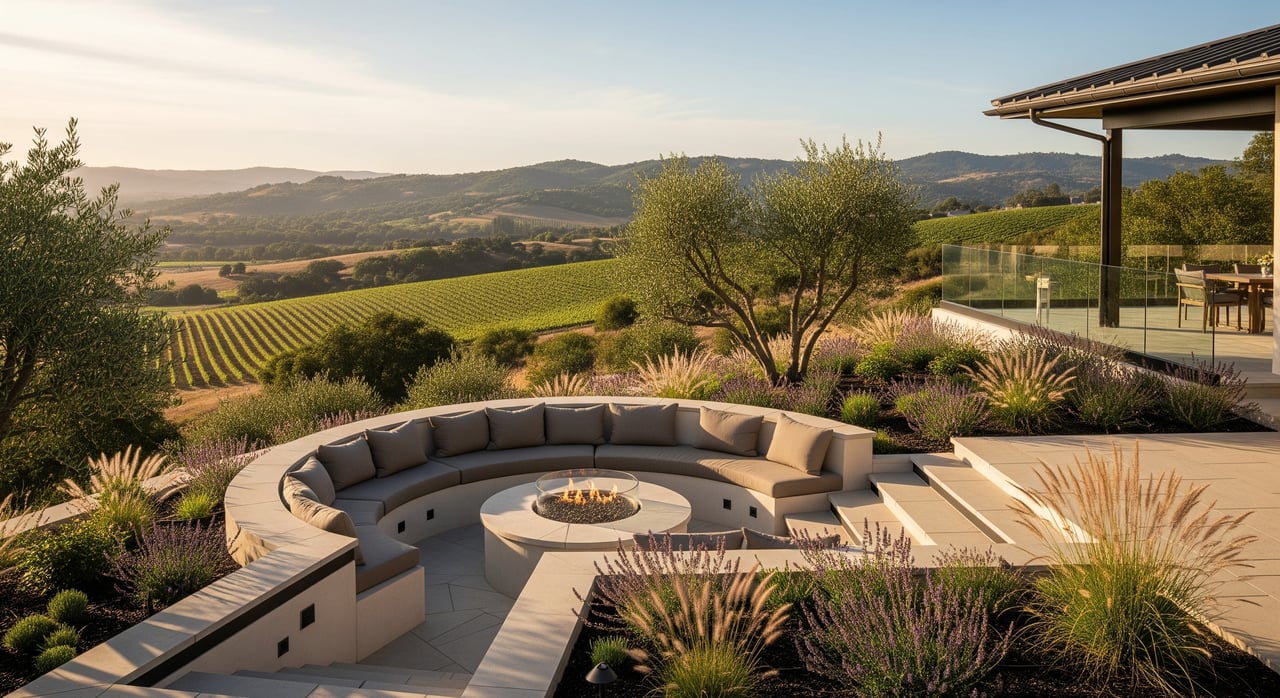
Is it possible to design a resort‑worthy yard in Paso Robles and still be fire‑ready? Absolutely. You want a landscape that protects your home, respects local rules, and feels like an intentional extension of your lifestyle. In this guide, you’ll learn how to build defensible space that looks curated and premium, with zone‑by‑zone tactics, smart plant choices, and local resources to keep you compliant and water‑wise. Let’s dive in.
Paso Robles rules you must know
Paso Robles enforces weed abatement each spring, with common clearances of 50 feet at parcel edges, 100 feet around structures, and 10 feet along each side of driveways. Grass should be cut to a maximum of 4 inches, and larger properties and areas under oak driplines have special rules. Review the city’s current guidance and inspection timing on the official weed abatement page before you begin work. You can find details on the city’s program at the City of Paso Robles Weed Abatement page: current clearance rules and inspections.
If your property is in a high or very high fire hazard area, you may need defensible‑space documentation for a sale under AB‑38. Check local maps and transaction guidance on the CAL FIRE SLO defensible space and AB‑38 page. For statewide defensible‑space principles, review CAL FIRE’s guidance. Paso Robles also promotes efficient irrigation and turf‑replacement rebates; confirm current outdoor watering rules and resources at the city’s Waterwise Landscaping page.
Design by defensible‑space zone
Use the same zones referenced by CAL FIRE and the city to organize your plan. This keeps your design clean and compliant.
Zone 0: 0 to 5 feet
- Core rule: keep this band as noncombustible as possible. CAL FIRE recommends hardscape rather than mulch near structures. See the Zone 0 overview on Ready for Wildfire.
- Luxe tactics that comply:
- Finish the perimeter with large stone pavers, honed concrete, or decomposed‑granite paths edged in steel for a refined base layer.
- Add sculptural succulents in metal or ceramic containers, placed on hardscape for a curated gallery feel. Keep any pots out of direct contact with siding and verify local allowances with the fire marshal.
- Swap wood gates or trellises at the house for steel, stone, or fiber‑cement features, and store outdoor cushions when not in use.
Zone 1: 5 to 30 feet
- Core rule: lean, clean, and green. Remove dead material, separate plant groups, and limb up trees to reduce ladder fuels in line with CAL FIRE’s defensible‑space guidance.
- Luxe tactics that comply:
- Create organized “plant islands” separated by stone or DG paths. This reads like a deliberate design instead of a continuous shrub mass.
- Choose low, high‑moisture specimens and prune into crisp forms. Think compact sages, yarrow, or California buckwheat grouped in rhythm.
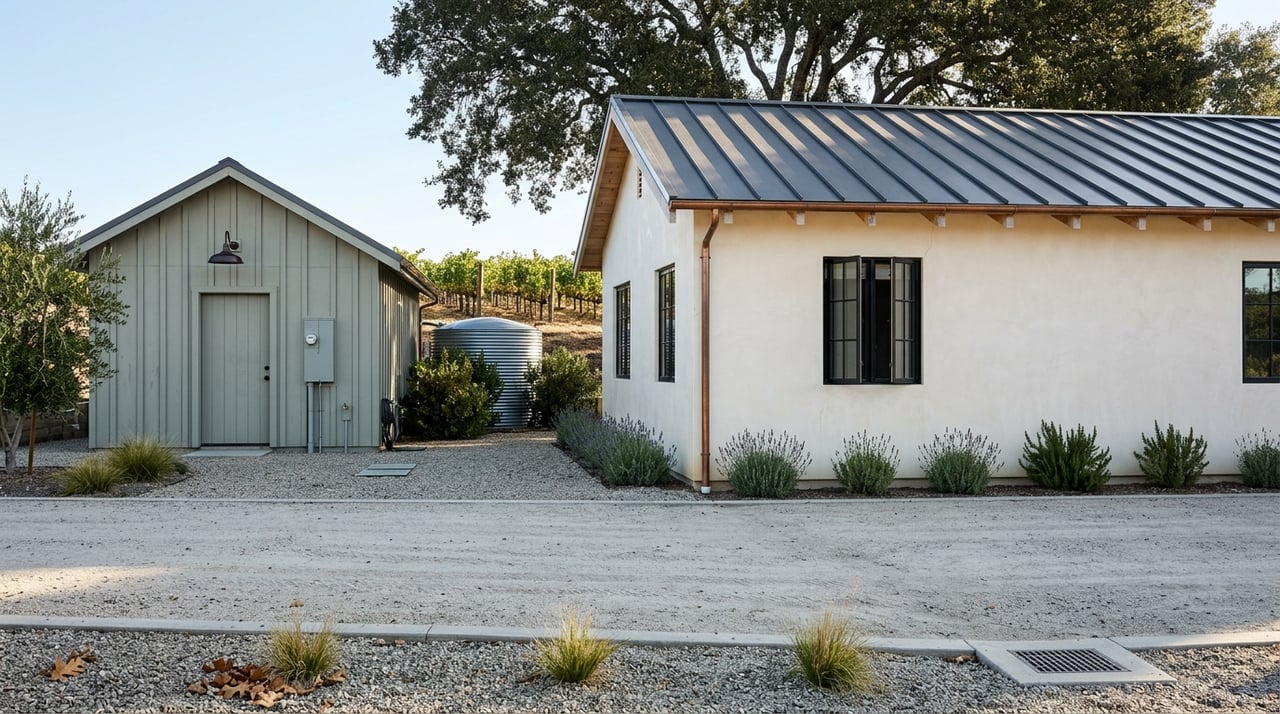
- Use stone mulch or gravel near the house for a Mediterranean look while adding noncombustible fuel breaks.
Zone 2: 30 to 100 feet
- Core rule: reduce fuel continuity, maintain mown grasses, and space shrubs and trees. Follow the city’s clearance standards and keep woodpiles and tanks well separated.
- Luxe tactics that comply:
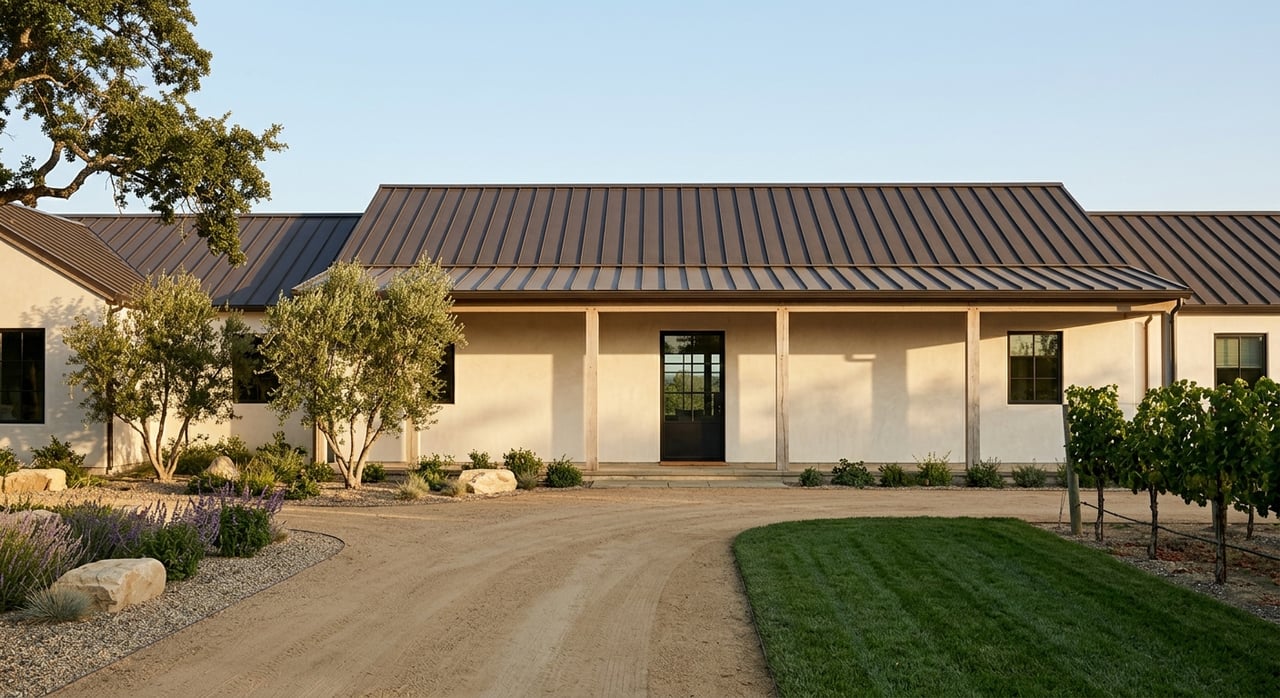
- Transition to a park‑like feel with widely spaced native oaks and specimen shrubs, plus mown or gravel corridors that double as fuel breaks.
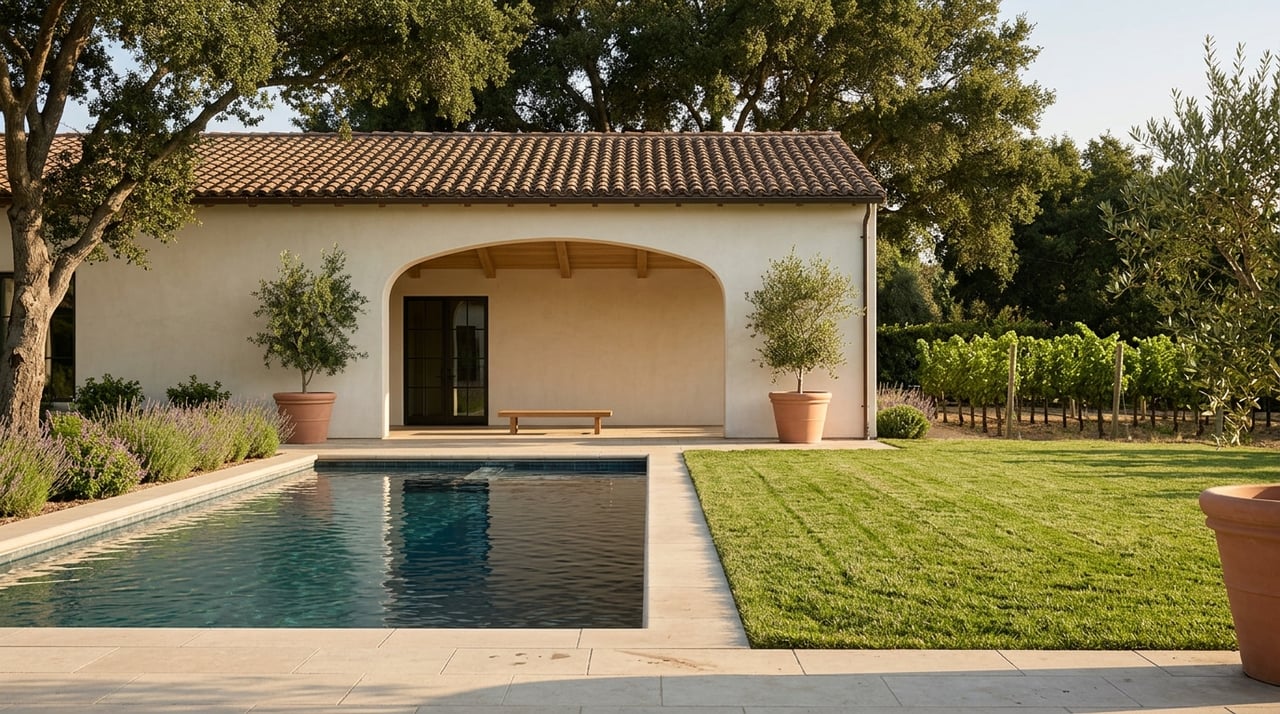
- Scale up hardscape: gravel terraces, a wide DG drive, or a stone entertaining terrace that functions as a resort outdoor room.
- If you maintain vineyards or orchards, mow and manage in line with the city’s weed‑abatement rules and protect oak root zones where work is required.
Plant palette for Paso Robles
Remember, no plant is fire‑proof. Focus on high‑moisture foliage, low resin, and open structure, and keep everything well spaced and maintained. UC resources summarize these principles clearly on the UC ANR defensible‑space page.
- Sculptural succulents and low‑fuel forms: Agave, Aloe, Sedum, Sempervivum. Use as focal pieces in containers or in lean, well‑kept beds near hardscape.
- Low, tidy natives for Zone 1: California fuchsia, yarrow, coastal sages, and California buckwheat. Group in small, repeated blocks for a designer’s rhythm.
- Specimen shrubs and small trees for Zones 1–2: ceanothus varieties, coffeeberry, toyon, lemonade berry, and western redbud. Use as spaced accents.
- Larger trees for depth in Zone 2: healthy native oaks and select deciduous ornamentals placed well away from structures.
- Use caution with oil‑rich or high‑fuel plants near the house, such as mature juniper, Italian cypress, eucalyptus, and unmanaged rosemary.
Mulch, irrigation, and water use
- Near structures, choose noncombustible materials like stone or gravel in lieu of wood mulch, especially within Zone 0. In outer zones, if you prefer organic mulch, keep it shallow and break up large areas with stone bands or paths.
- Use drip irrigation with a smart controller to maintain plant health and reduce water waste during dry months. Healthier plants hold more moisture and are less likely to ignite.
- Before you set schedules or replace turf, review local resources and possible rebates at the city’s Waterwise Landscaping page.
Maintenance calendar and timing
A luxury landscape only looks that way if it is maintained. Tie your schedule to the city’s inspection window and the summer fire season.
- Quarterly
- Clear gutters and roofs, remove leaves from decks and under eaves, and check irrigation for leaks or clogs.
- Spring and summer
- Mow annual grasses to 4 inches or less, remove dead material, and prune lower tree branches to maintain vertical spacing.
- Annually
- Confirm you meet Paso Robles weed‑abatement requirements ahead of inspections and respond promptly to any notices. Review the city’s weed abatement page for timelines and contact information.
Budget, help, and next steps
- Budgeting basics
- Expect quality hardscape to start in the low thousands and scale with area and materials. Specimen plants can vary widely, and ongoing seasonal pruning and irrigation service should be part of your plan.
- Local help
- Take advantage of community chipping and education through the FireSafeSLO Fire Safe Council. For potential funding in some areas, check the California Wildfire Mitigation Program and your local fire district.
- Working around oaks
- Protect oak root zones. Paso Robles notes special care under oak driplines, so confirm methods with the city before excavation or heavy pruning.
- Hiring contractors
- Choose licensed, insured pros with fire‑smart project experience, and verify whether any permits or pre‑inspections are recommended by Paso Robles Fire and Emergency Services.
A fire‑smart landscape in Paso Robles can be both protective and beautiful. When you lead with quality hardscape, repeated sculptural plant forms, efficient irrigation, and consistent maintenance, you get the upscale feel you want and the defensible space you need.
If you are planning updates before a sale or want property‑specific guidance for a home, ranch, or vineyard estate, connect with our team at Central Coast Landmark Properties , Inc.. We combine local insight with luxury marketing to help you protect value and elevate your property.
FAQs
Can I keep plants close to my house in Paso Robles?
- You can, but within Zone 0 the safest approach is noncombustible hardscape and only low‑fuel, well‑kept plants in containers, aligned with Ready for Wildfire’s Zone 0 guidance.
What does “defensible space” actually require in California?
- The state emphasizes up to 100 feet of defensible space around structures with specific spacing and maintenance rules; review the details on CAL FIRE’s defensible‑space page.
How do local weed‑abatement rules work in Paso Robles?
- The city inspects each spring and requires clearances like 100 feet around structures, 50 feet at parcel edges, and grass cut to 4 inches; see the city’s weed abatement page for current timelines and standards.
Which plants are considered more fire‑resistant on the Central Coast?
- No species is fire‑proof, but UC ANR points to high‑moisture, low‑resin plants with open branching, proper spacing, and steady maintenance as lower risk; see UC ANR’s defensible‑space guidance.
Are there local programs that help with vegetation removal?
- Yes, FireSafeSLO offers community chipping and education, and some grants may be available through the California Wildfire Mitigation Program; availability changes, so check current offerings regularly.